Wednesday, May 21, 2014

People with Insomnia


This is a character from the popular series Naruto. The black rigns around his eyes have formed from the sleep disorder Insomnia, due to the beast within him. He has been affected by this disorder since he was a child.

Dreams


  • A sequence of images, emotions, and thoughts passing through a sleeping person's mind
  • Manifest Content : the remembered story-line of a dream
  • Latent Content : the underlying meaning of a dream

Why do we dream?

Freud's wish-fulfillment Theory
  • Dreams are the key to understanding our inner conflicts
  • Ideas and thoughts that are hidden in our unconscious
  • Manifest and latent content
Information-Processing Theory
  • Dreams act to sort out and understand the memories that you experience that day
  • REM sleep does increase after stressful events
Activation-Synthesis Theory
  • during the night our brainstem releases random neural activity, dreams may be a way to make sense of that activity


Sleeping Disorders

Insomnia

  • Persistent problems falling asleep
  • Affects 10% of the population 
Narcolepsy
  • Suffers from sleeplessness and may fall asleep at unpredictable or inappropriate times
  • Directly into REM sleep
  • Less than .001% of population
Sleep Apnea
  • A person stops breathing during their sleep
  • Wake up momentarily, gasps for air, then falls back to sleep
  • Very common especially in heavy males
Night Terrors
  • A sleep disorder characterized by high arousal and an appearance of being terrified
  • Occurs in stage A, not REM, and are not often remembered
Sleepwalking
  • sleepwalking is a sleep disorder affecting an estimated 10% of all humans at least once in their lives
  • sleepwalking most often occurs during deep non-REM sleep (stages 3 or 4) early in the night

States of Consciousness


  • Sleep
  • Hypnosis
  • Drugs

Sleep
  • A state of consciousness
  • We are less aware of our surroundings
  • Why do we daydream?
  • The can help us prepare for future events
  • THey can nourish our social development
  • Can substitue for impulsive behavior
Fantasy Prone Personality
  • Someone who imagines and recalls experiences with lifelike vividness and who spends considerable time fantasizing
Biological Rhythms

Annual Cycle : Seasonal variation
  • 28 day cycles : menstrual cycle
  • 24 hour cycle : Our circadian rhythm
  • 90 minute cycle : sleep cycles
Circadian Rhythm
  • Our 24 hour biological clock
  • Our body temp and awareness changes throughout the day
Sleep Stages
  • 5 identified stages of sleep 
  • Takes 90-100 minutes to pass through all 5 stages
  • The brains waves will change according to the sleep stage you are in
  • The first four stages are known as NREM
  • the 5th is called REM sleep
Stage 1
  • Kind of awake, kind of asleep
  • Only lasts a few minutes, and you usually only experience it once a night
  • Eyes begin to roll slightly
  • Your brain produces theta waves ( high amplitude, low frequency (slow))
Stage 2 
  • The "Baseline" of sleep
  • This stage is part of the 90 minute cycle and occupies approximately 45-60& of sleep
  • More Theta waves that get progressively slower
  • Begin to show sleep spindles ( short bursts of rapid brain waves)
Stages 3 and 4
  • Slow wave sleep
  • you produce Delta waves
  • If awaken you will be very groggy
  • Vital for restoring body's growth hormones and good overall health
  • May last 15-30 minutes
  • It is called "slow wave" sleep because brain activity slows down dramatically from the "theta" rhythm of stage 2 to a much slower rhythm called "delta" and the height or amplitude of the waves increases dramatically
REM sleep (Stage 5)
  • Rapid eye-movement
  • Brain is very active
  • Dreams usually occur in REM

Learning

Most learning is associative learning

  • Learning that certain events occur together
There  are 3 main  types of Learning

  • Classical Conditioning (Ivan Pavlov)
  • Observational Conditioning
  • Operant Conditioning
Unconditional Stimulus (UCS) : a stimulus that naturally and automatically triggers a response
Unconditional Response : the unearned, naturally occurring response to the UCS
Conditioned Stimulus (CS) : an originally irrelevant stimulus that, after association with the UCS, comes to trigger a response.
Conditioned Response : the learned response to a previously neutral stimulus

Acquisition
  • The initial stage of learning
  • The phase when the neutral stimulus is associated with  the UCS so that the neutral stimulus comes to elicit the Conditioned Response (thus becoming the CS)
Extinction 
  • The diminishing of a conditioned response
Spontaneous Recovery
  • The reappearance after a rest period, of an extinguished conditional response
Generalization
  • The tendency oncea response has been conditioned, for stimuli similiar to the CS to elicit similar  responses
Discrimination
  • The learned ability to distinguish between a CS  and another stimuli that does not signal the UCS

Operant Conditioning
  • A type of learning in  which behavior is strengthened if followed by reinforcement or diminished if followed b punishment
Classical vs. Operant
  • They both use acquisition, discrimination, SR, generalization and extinction.
  • Classical conditioning is automatic
  • Operant conditioning involves behavior where one can influence their environment with the behaviors which have consequences
The Law of Effect (Edward Thorndike)
  • Edward Thorndike
  • Rewarded behavior is  likely to recur
B.F Skinner
  • Shaping - A procedure in Operant Conditioning in which reinforces guide behavior closer and closer towards a goal
Reinforcer
  • Any event that strengthens the behavior it follows
  • Positive Reinforcement - strengths  a response by presenting a stimulus after a response
  • Negative Reinforcement - strengthens a response by reducing or removing an aversive stimulus
Punishment
  • Any event that decreases the behavior that follows it
  • Positive Punishment - something bad is added in order to decrease an unwanted behavior
  • Negative Punishment - Something good is removed to  cause an unwanted behavior to  decrease
Types of reinforcers

Primary Reinforcer
  • An innately reinforcing stimulus
Conditioned (Secondary) Reinforcer
  • A stimulus that gains its reinforcing power through its association with a primary reinforcer
Partial Reinforcer
  • Reinforcing a response only part of the time
  • The Acquistion process is slower
  • Greater resistance to extinction
Fixed -ratio Schedules
  • A schedule that reinforces a response only after a specified number of responses
Variable-ratio Schedule
  • A schedule of reinforcement that reinforces a response after an unpredictable number of responses
Fixed-Interval Schedule
  • requires a set amount of time to elapse before the reinforcement is given
Variable-interval Schedule
  • A schedule of reinforcement that reinforces a response at unpredictable time intervals


Token Economy
  • Every time a desired behavior is performed, a token is given they can trade tokens in for a variety of prizes (reinforcers) 
  • Used in homes,prisons,mental institutions an school
Observational Learning
  • Albert Bandura and his bobo doll
  • We learn through modeling behavior from others
Latent Learning
  • Edward Toleman 
  • Latent means hidden
  • Sometimes learning is not immediately evident
Insight Learning
  • Wolfgang Kohler
  • Sometimes animals learn through the "ah-ha" experience



Encoding

Automatic Processing

  • Unconscious encoding of incidental information
  • You encode space, time and word meaning without effort
  • Things can become automatic with practice
Effortful Processing

  • Encoding that requires attention  and conscious  effort
  • Rehearsal is the most common effortful processing technique
  • Through enough rehearsal, what was effortful becomes automatic
The Next-in-Line Effect : We seldom remember what the  person has just said or done if we are next in line.

Spacing Effect

  • We encode better when we study or  practice over time
  • Do not cram
Serial positioning effect
  • Our tendency to  recall the best, the  last and  first items in a list
Types of Encoding

Semantic Encoding : the encoding of meaning, like the meaning of words

Acoustic Encoding : The encoding of sound, especially the  sounds of words

Visual Encoding : the encoding of picture images.

Tricks to encode
  • use IMAGERY: Mental Pictures 
  • Mnemonic Devices use imagery. Like my "peg word" system or....

Chunking

  • Organizing items into familiar manageable units
  • Often it will occur automatically

Memory


  • The persistence of learning over time through the storage and retrieval of info
Encoding

  • The processing of information into the memory system storage
  • The retention of encoded  material over time
Retrieval 

  • The process of getting the information out of memory storage
Recall v. Recognition

  • With recall - you must retrieve the information from your memory (fill-in-the blank tests.)
  • With recognition - you must identify the target from possible targets (multiple choice test.)
Flashbulb Memory

  • A clear moment of an emotionally significant moment or event
Types of Memory

  1. Sensory Memory
  • The immediate, initial recording of sensory information in  the memory system
  • Stored just for an instant, and most gets unprocessed 
    2.   Short-term Memory

  • Memory that holds a few items briefly
  • Seven Digits (plus or minus two.)
  • The inf will be stored into long-term or forgotten
    3. Working Memory (Modern day STM)
  • Another way of describing the use of short-term memory is called working memory
  • Working Memory has three parts
  1. Audio
  2. Visual
  3. Integration of audio and  visual (controls where your attention lies.)
    4. Long-term Memory
  • The relatively permanent and limitless storehouse of the memory system.
Types of Long-term memories

Explicit (declarative): with conscious recall
  • Facts (General Knowledge "Semantic Memory")
  • Personally experienced events
Implicit (non-declarative): without conscious recall
  • Skills - motor and cognitive
  • Classical and operant conditioning effects
Types of retrieval failure

Proactive Interference
  • The disruptive effect of prior learning on the recall of new information 
Retroactive Interference
  • The disruptive effect of new learning on the recall of old info
Misinformation Effect
  • Incorporating misleading information into one's memory of an event

Wednesday, April 23, 2014

Opponent Process Theory Diagram


Opponent Process Theory

Sensation and Perception Notes

Sensation and Perception

  • Sensation: Your window to the world
  • The process by which our sensory receptors and nervous system receive stimulus from the environment
  • Perception: Interpreting what comes in your window
  • Bottom-Up v. Top-Down Processing
  • Bottom-Up- Begins within the sense receptors and works up to the brain's integration of sensory information (Thalamus)
  • Top-Down Processing- Information processing guided by higher level mental processes
  • Absolute Threshold
  • The minimum stimulation needed to detect a stimulus 50% of the time
  • Difference Threshold
  • The minimum difference that a person can detect between two stimuli
  • Also known as Just Notable Difference
  • Weber’s Law
  • The idea that, to perceive a difference between two stimuli, they must differ by a constant percentage; not a constant amount
  • Signal Detection Theory
  • Predicts how we detect a stimulus amid other stimuli
  • Assumes that we do not have an absolute threshold
  • Sensory Adaptation
  • Decreased responsiveness to stimuli due to constant stimulation
  • Selective Attention
  • The focusing of conscious awareness on a particular stimulus
  • Cocktail-Party Phenomenon
  • Ability to focus one’s listening attention on a single talker among a mixture of conversations and background noises, ignoring other conversations
  • Form of selective attention

Language/Thought Notes

Language
  • Spoken/Written/Gestured words we use to communicate
  • Phonemes
  • Smallest distinctive sound unit in a spoken language
  • Morphemes
  • Smallest unit with meaning (prefix/suffix)
  • Grammar
  • Rules in language
  • Semantics
  • Set of rules by which we derive meaning
  • Adding “ed” makes word past tense
  • Syntax
  • Rules for making words into correct sentences
  • Stages of language development:
  • Babbling Stage- 3-4 mos.; infant makes spontaneous sounds
  • One-word stage- 1-2 yrs.; one word to communicate large messages
  • Two-word Stage- 2 yrs.; Two words to communicate meanings (telegraphic speech)
  • Skinner
  • Explain language through social learning theory (imitates then gets reward)
  • Chomsky- Inborn Universal Grammar
  • Acquire language too quickly
  • “Learning box”
  • Whorf’s Linguistic Relativity
  • Language determines way we think
  • No past tense = no thinking of past
  • Thinking Without Language
  • Think in words and mental pictures
  • Kohler
  • Chimps can problem solve
Thought

  • Cognition-Thinking, knowing, remembering
  • Concepts- similar to Schemas
  • Grouping of similar things
  • Prototype- Best example
  • Algorithm- Logical procedure to solving something
  • Heuristics- Strategy that allows us to make judgements and solve problems efficiently
  • Short cut that is prone to error
  • Insight- sudden solution
  • Confirmation Bias- wanting to search for evidence to confirm preconceptions
  • Fixation- Inability to see problem from different perspective
  • Mental Set- Approach something in particular way
  • Functional Fixedness- Think of things only in their useful function
  • Types of Heuristics:
  • Representativeness- Judging something by our prototype; may ignore something important
  • Availability- Estimating likelihood of events on availability in memory
    • It it comes to mind easily, it’s common
  • Overconfidence- Be more confident than correct
  • Overestimate personal accuracy
  • Framing- Way an issue is posed
  • Can drastically effect judgement
  • Belief Bias- One’s prior beliefs affect logical reasoning
  • Belief Perseverance- Sticking to thoughts even after source is proven wrong

Intelligence

  • The ability to learn from experience, solve problems, and use knowledge to adapt to new situations
  • Culturally specific
  • Factor Analysis- Statistical procedure, identifies clusters of related items on a test
  • General Intelligence- Charles Spearman
  • Multiple Intelligences- Howard Gardner: Studied savants (limited mental ability except in one area)
  • Types:
  • Visual/Spatial
  • Verbal/Linguistic
  • Logical/Mathematical
  • Bodily/Kinesthetic
  • Musical/Rhythmic
  • Interpersonal
  • Intrapersonal
  • Natural
Sternberg’s Aspects:
  • Analytical-problem solving
  • Creative-novel ideas
  • Practical-everyday tasks
  • Emotional Intelligence
  • Ability to perceive, express, understand, regulate emotion
  • Assessing Intelligence
  • Alfred Binet and Theodore Simon- Mental Age: what person of particular age should know
  • IQ= (Mental Age/Chronological Age)100
    • Doesn’t work with older people
  • Wechsler Adult Intelligence Scale (WAIS) Uses factor analysis
Aptitude
  • Test designed to predict person’s future performance
  • Learning ability
  • Achievement
    • Assess what person has learned
  • Tests must be:
    • Standardized: Pre-tested, form normal distribution/bell curve
      • Flynn Effect: Chart rises
    • Reliability: Consistent
    • Validity: How much a test measures what its supposed to
      • Predictive
      • Content
  • Changes over time depending on type of intelligence (crystallized or fluid)
  • Groups affect intelligent test scores
Tests discriminate but we must look deeper

Ear Diagram


Fully Labeled Ear Diagram

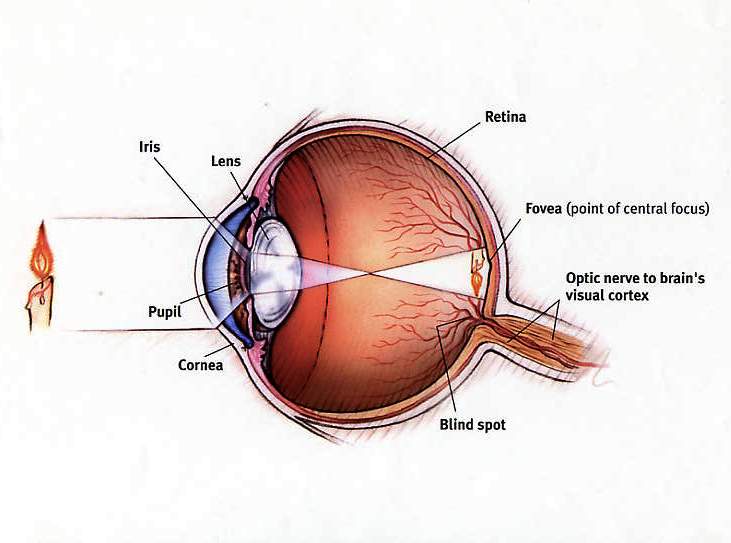
Eye Diagram

 Fully Labeled Eye Diagram

Tuesday, April 22, 2014

Moral Development


Moral Development
  • Lawrence Kohlberg

  • Pre-Conventional Morality
    • Morality based on rewards and punishments
    • If you are rewarded then it is okay
    • If you are punished, the act must be wrong
  • Conventional Morality
    • Look at morality based on how others see you
    • If your peers, or society, thinks it is wrong, then so do you
  • Post-Conventional Morality
    • Based on self-defined ethical principles
    • Your own personal set of ethics

Social Development

Social Development

  • Up until about a year, infants do not mind strange people (maybe because everyone is strange to them)
  • At about a year, infants develop stranger anxiety
  • Separation Anxiety- A child is separated from his/hers parents
  • Attachment:
    • The most important social construct an infant must develop is attachment (a bond with a caregiver)
    • Lorenz discovered that some animals form attachment through imprinting
    • Harry Harlow and his monkeys
    • Harry showed that monkeys needed touch to form attachment
    • Critical Periods: The optimal period shortly after birth when an organism’s exposure to certain stimuli or experiences produce proper development
    • Those who are deprived of touch have trouble forming attachment when they are older
    • Types of Attachment: (Mary Ainsworth’s Strange Situation)
      • Secure
      • Avoidant
      • Anxious/Ambivalent
  • Parenting Styles:
    • Authoritarian Parents
      • Parents are the bosses
      • You have no say so
      • Can not question them
    • Permissive Parents (Laissez Faire)
      • Children are bosses
    • Authoritative Parents
      • Democratic
      • Children participate in decisions that affect their life
      • Parents and children compromise
  • Erik Erikson
    • Neo-Freudian
    • Thought our personality was influenced by our experiences with others
    • Stages of Psychosocial Development
      • Trust v. Mistrust
        • Is my world predictable and supportive?
        • The trust or mistrust they develop can carry on with the child for the rest of their lives
      • Autonomy v. Shame and Doubt
        • Toddlers begin to control their bodies (toilet training)
        • Control temper tantrums
        • Big word is “NO”
        • Can they learn control or will they doubt themselves?
        • Around 2-3 years old
      • Initiative v. Guilt
        • Word turns from “No” to “Why?”
        • Want to understand the world and ask questions
        • Is their curiosity encouraged or scolded?
        • Around 5-6 years old
      • Industry v. Inferiority
        • Are they worthless or successful?
        • School begins
        • We are for the first time evaluated by a formal system and our peers
        • Do we feel good or bad about our accomplishments?
        • 6-12 Years Old
      • Identity v. Role Confusion
        • In our teenage years we try out different roles
        • Who am I?
        • What group do I fit in with?
        • If I do not find myself I may develop an identity crisis
        • Around Teenage Years
      • Intimacy v. Isolation
        • Have to balance work and relationships
        • WHat are my priorities?
        • Around 19-20 Years Old
      • Generativity v. Stagnation
        • Is everything going as planned?
        • Am I happy with what I created?
        • Mid-Life Crisis
        • Around 40-50 Years Old
      • Integrity v. Despair
        • Look back on life
        • Was my life meaningful or do I have regret?
        • Older People

Cognitive Development

Cognitive Development

    • It was thought that kids were just stupid versions of adults
    • Jean Piaget said kids learn differently than adults
  • Schemas
    • Children view the world through schemas (as do adults for the most part)
    • Schemas are ways we interpret the world around us
    • It is basically what you picture in your head when you think of anything
  • Assimilation
    • Incorporating new experiences into existing schemas
  • Accommodation
    • Changing an existing schema to adopt to new information
  • Stages of Cognitive Development (Jean Piaget)
    • Sensorimotor Stage
      • Experience the world through our senses
      • Do not have object permanence
      • Around 0-2 Years Old
    • Preoperational Stage
      • Have object permanence
      • Begin to use language to represent objects and ideas
      • Egocentric: Cannot look at the world through anyone’s eyes but their own
      • Around 2-7 Years Old
      • Cannot Grasp Conservation
        • Idea that a quantity remains the same despite changes in appearance and is part of logical thinking
    • Concrete Operational Stage
      • Can demonstrate concept of conservation
      • Learn to think logically
    • Formal Operational Stage
      • Abstract reasoning
      • Manipulate objects in our mind without seeing them
      • Hypothesis testing
      • Trial and Error
      • Metacognition
      • Not every adult gets to this stage
  • Types of Intelligence
    • Crystallized Intelligence
      • Accumulated knowledge
      • Increases with age
    • Fluid Intelligence
      • Ability to solve problems quickly and think abstractly
      • Peaks in the 20’s and then decreases over time